Yiwu Market District 1 Guide
Toys, jewelry, flowers and festive crafts — where to start and what to check.
What can you buy in District 1?
District 1 is a starting point for toys, artificial flowers, jewelry, hair accessories and festive crafts. Use the floor directory to shortlist the product areas that match your buying list.
District 1 floor directory
Use this directory to choose a starting floor. The categories below follow the official Chinagoods District 1 introduction; the checks are our buying guidance.
| Floor | Main product areas | What to check |
|---|---|---|
| 1F | Artificial flowers, flower accessories and toys | Materials, sizes and sample quality |
| 2F | Hair accessories and jewelry | Finish, plating and product specifications |
| 3F | Festive crafts, decorative crafts, porcelain, crystal and photo frames | Dimensions, breakage protection and packaging |
| 4F | Factory direct-sales center | Supplier capabilities and order requirements |
District 1 East: jewelry and components
District 1 East (一区东扩) is the eastern extension of District 1, with a focus on jewelry and jewelry components. Add it to your visit when you need parts for assembly, a wider jewelry assortment or a supplier whose address specifically names the extension. Its floor directory is separate from the main District 1 building.
| Floor | Main product areas | Buying focus |
|---|---|---|
| 1F | Jewelry components | Material, dimensions, finish and sale unit |
| 2F | Jewelry and jewelry components | Finished pieces versus parts; matching colors and sizes |
| 3F | Jewelry | Construction, fastening, assortment and packaging |
Floor reference: Yiwu Forestry Fair’s District 1 East introduction ↗, published by Yiwu China Commodity City Exhibition Co., Ltd. Confirm the current booth before visiting.
Bring a component specification or a matching sample
For beads, chains, clasps or other parts, record dimensions, hole or connection size, stated base material, finish and color. Clarify whether the price is per piece, strand, bag or weight, and write down the contents of that unit. Compare components together if they must fit or share the same finish. Ask whether color and finish can be matched on a repeat order, and save an approved physical reference.
For finished jewelry, record the exact design and fastening, inspect the back and joints, and specify the color and quantity split. Keep loose components and assembled goods on separate quote lines so that assembly, retail packing and minimums are clear.
What to check in each product area
A similar-looking sample does not necessarily mean the same product. Before you collect prices, decide which details must stay the same across suppliers. Photograph the item alongside its article number and write down the specification that was actually quoted.
Artificial flowers: compare the whole stem, not just the flower head
Check the overall stem length, flower-head size, number of leaves, material and color. Bend the stem and look at how the head and leaves are attached. A sample arranged in a display may look fuller than the individual stems supplied in a carton, so ask to see one sale unit outside the display.
Ask whether the quote is per stem, bunch or arrangement. Record how many pieces are packed together and the outer-carton dimensions. For bulky flowers, packing volume is an important part of planning shipment; a low unit price alone does not tell you how much space the order will occupy.
Toys: test the exact version you intend to buy
For a plush item, inspect seams, stuffing consistency and any attached parts. For an electric or inflatable toy, try the function and ask which batteries, accessories or pump are included. Record size, material, intended age group and packaging rather than relying on the product name.
Tell the supplier your destination market and intended use, then ask for the product documentation your buyer requires. Check that any documents provided refer to the exact model being quoted. If the sample is changed later, reopen the specification discussion instead of assuming that the original documents still apply.
Jewelry and hair accessories: make finish and color explicit
Compare base material, finish, dimensions and the way stones or decorative parts are fixed. Open and close clasps, clip springs and other moving parts. Photograph the back of the product as well as the front: fastening and assembly details are easy to miss in a display photo.
Ask whether the minimum applies to one design, one color or a mixed assortment. A quote for a plain clip may exclude a custom finish, backing card or individual bag. Keep those options separate in your notes so that suppliers are pricing the same version.
Festive crafts and decorative gifts: work back from the delivery date
Measure the item and check finish, hanging fittings and any fragile areas. For porcelain, crystal and frames, ask to see the proposed inner protection and carton arrangement. Record whether the price includes a retail box or only transport packaging.
Share the date when you need the goods available, not simply the date when you hope to order. Ask when the quoted lead time starts, whether materials are ready and which sample or artwork approvals must happen first. Seasonal goods need room in the plan for confirmation, inspection and transport.
Factory direct-sales center: verify the supplier behind the sample
The fourth-floor directory describes a factory direct-sales center. Treat that as a place to explore supplier capabilities, rather than proof that every product is made by the business you are speaking to. Ask which items they produce, which they source, where production takes place and who will be responsible for your order.
If you need a custom design, bring a specification or reference sample. Discuss tooling, sample approval, minimums and repeat-order consistency before comparing a custom quotation with a ready-stock price.
Choose a route around your buying list
Start with your highest-priority category. Moving through every floor can leave less time for useful supplier conversations. These are suggested sequences, not timed walking routes; confirm the actual booth address before moving between areas.
| Your priority | Where to start | What to do next |
|---|---|---|
| Toys or flowers | 1F: compare a defined product specification | Save comparable samples and quotes; visit 4F only if a supplier or relevant product is confirmed there. |
| Jewelry or hair accessories | 2F: shortlist designs and finishes | Clarify minimums by design and color, then return to shortlisted booths with the same buying brief. |
| Seasonal decorations or gifts | 3F: inspect finish, dimensions and packaging | Explore relevant 4F suppliers if needed; confirm the order timetable before leaving. |
Use a first pass to identify suitable products. Use a second pass to resolve the missing details for your shortlist. Before leaving a booth, save its district, floor, booth number, business name and contact together. A product photo without the booth reference is difficult to follow up later.
If a supplier sends you to District 1 East, ask for the full address and a location pin first. The main district and eastern extension should not be treated as the same meeting point. For a wider itinerary, see the six-district overview and first market-day guide.
Before you compare suppliers
Define the product
Record size, material, finish and packaging.
Ask for the same quote details
Confirm MOQ by item and color, sample costs and lead time.
Keep a usable record
Save the district, floor, booth number, contact and sample photos.
Bring one buying brief to every shortlisted booth
Write a short brief before you start. For example: “Hair clip, 8 cm long, matte black finish, the same spring and backing card as the approved sample. Please quote 1,000 pieces and state the minimum per color.” This is an illustrative request, not a market minimum. Replace the details with your actual needs.
If a supplier proposes an alternative material or packaging, record it as a different option. Do not quietly overwrite the original specification: you will otherwise compare two prices for different goods.
Questions you can use at the booth
- “What is the article number, and is this the exact version in your quotation?”
- “Is that price per piece, set, bunch or carton? Which currency and delivery basis does it use?”
- “What is the minimum for this design and for each color? Can colors be mixed?”
- “What packaging is included, and what does the alternative packaging cost?”
- “Is the item in stock or made to order? When does your lead time start?”
- “Can we approve a sample before the bulk order? What are the sample cost and preparation time?”
- “Who should we contact after the visit, and can you send these details in writing?”
A quote record you can actually compare
Keep these fields in your collection sheet or spreadsheet. Fill a gap with “not confirmed” rather than guessing. The objective is to return with comparable offers, not the largest number of photographs.
| Record | Include | Why it matters |
|---|---|---|
| Product identity | Photos, article number, size, material, finish and color | Links the quote to a specific version. |
| Supplier location | District, floor, booth number, business name and contact | Makes a return visit and follow-up possible. |
| Price basis | Currency, unit, quantity quoted and delivery basis | Avoids comparing a set price with a piece price. |
| Minimums | Minimum by item, color and customization | Shows whether your assortment is feasible. |
| Packaging | Inner pack, pieces per carton, carton size and weight | Supports packing and transport planning. |
| Timing & samples | Stock status, lead-time trigger, sample cost and approval steps | Separates available goods from future production. |
| Open questions | Missing details, person responsible and next action | Turns your visit notes into a follow-up list. |
For a more detailed comparison method, read how to compare quotes at Yiwu Market. Use the same price basis, quantity and packing assumptions before deciding which offer is better.
After the visit: confirm before placing an order
Send each shortlisted supplier a concise recap with the product photo, specification, quantity and unresolved questions. Ask them to confirm the details in writing. Match any updated quotation to your record and keep the approved sample reference with it.
If you will combine purchases from several booths, collect packing information early and agree who will receive, check and consolidate the goods. Do not assume that each booth uses the same delivery arrangements. Keep a separate list of approved items and items still awaiting clarification.
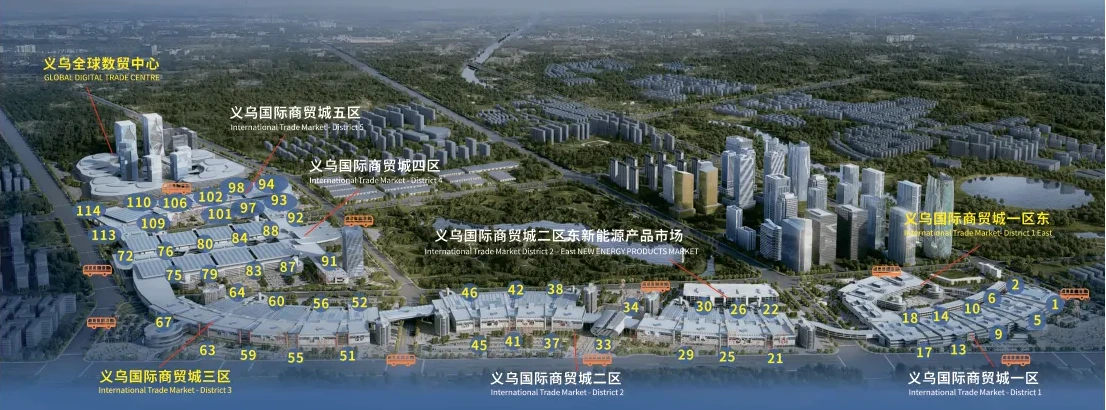
Find District 1 on the map
District 1 questions
Where can I find toys in District 1?
The official directory lists toys on the first floor. Confirm the booth and product type before visiting.
Is there one minimum order quantity for District 1?
No single MOQ applies to every supplier. Confirm minimums by item, color and customization.
Can I source jewelry and festive crafts in one visit?
Start with the relevant floors, then allow time for supplier discussions and sample comparisons.
Where are artificial flowers and jewelry?
The official directory places artificial flowers on 1F and jewelry and hair accessories on 2F. Start with the relevant floor, then verify the current booth address for the specific supplier you want to meet.
Can I buy a small quantity or mix different colors?
Ask each supplier. Stock availability, design, color and packaging can change what they will accept. State your total quantity and the split by color; request a written quote for that mix rather than assuming a displayed price applies.
Should I visit every floor in District 1?
Only if it helps your buying list. Start with your priority category and allow time to revisit shortlisted suppliers. Add another floor when you have a specific product or supplier to check, rather than treating every floor as a required stop.
Does a fourth-floor booth guarantee a factory price?
No. The directory describes a factory direct-sales center, but you still need to verify the business, product specification and quotation. Compare the same item and terms, and ask who makes the product and who will fulfill the order.
Can I use the PDF instead of the interactive map?
The PDF is useful for an offline overview of districts and floors. It is a brochure reference, not live booth navigation. Use the interactive map for orientation and confirm the current entrance and booth address with your supplier before visiting.
▤ Sources & editorial notes
- Market directory: Chinagoods District 1 introduction ↗
- Eastern extension: Yiwu Forestry Fair District 1 East directory ↗
- Map resource: Lance market map
- Download: Lance brochure excerpt (2 pages)
Main-building floor categories follow the official District 1 introduction; eastern-extension categories follow the exhibition organizer’s directory. Sources checked October 3, 2026. Product checks and visit sequences are Lance editorial guidance. Booth locations, availability, minimums and lead times must be confirmed with individual suppliers. The brochure is an offline reference, not a live directory.

Practical guidance from the Yiwu market.