Yiwu Market District 5 Guide
Imported goods, bedding, fabrics and automotive accessories — floors, sample checks and a practical buying route.
What can you buy in District 5?
Yiwu Market District 5 brings together imported goods, bedding, fabrics and knitting materials, automotive products and related categories such as hair products and pet supplies. Start with your buying category, then confirm the exact booth and whether the offer suits your intended sales market.
District 5 floor directory
The starting floors below follow the Yiwu Fair market directory. Chinagoods lists additional categories across 2F–4F without assigning every one to a specific floor. Confirm individual supplier addresses before visiting.
| Floor | Directory starting point | What to check |
|---|---|---|
| 1F | Imported goods: food and drinks, daily goods, clothing, accessories and crafts | Product origin, supplier, exact item and sales-market suitability |
| 2F | Bedding | Finished dimensions, set contents and materials |
| 3F | Textiles and knitting raw materials | Usable width, composition, weight and sale unit |
| 4F | Automotive products and accessories | Vehicle compatibility, dimensions and included fittings |
| 5F | Trade and e-commerce services; additional mixed-use spaces reported in 2026 | Arrange a specific supplier or service meeting first |
What to check in each product area
Five products can look suitable on display and still need five different buying briefs. Imported branded goods need clear supplier and product records; bedding needs a measurement sheet; fabric needs a defined unit; an automotive accessory needs fit information. Keep those details attached to the quote before comparing prices.
Imported goods: distinguish origin from your sourcing objective
The imported-goods area is not simply another directory of China-made factory products. Ask where the item was made, who supplies it and whether the offer is for stock held locally or future delivery. Record the exact brand, product variant, pack size and supplier item number.
For branded stock, request information about the supplier’s source and the sales channels it can support. Tell the supplier where you intend to sell, and ask which documents and product details it can provide for that exact item. Do not infer suitability for another market from the fact that a product is displayed for sale in China.
For packaged food or other dated products, record the batch, date information, remaining shelf life and storage instructions supplied with the goods. A display sample can differ from the batch available to order. Confirm your requested quantity and the actual stock before arranging shipment.
Bedding: define every piece in the set
Write out the contents: sheet or fitted sheet, duvet cover, pillowcases and any other pieces. Record finished dimensions for each component. Labels such as “queen” and “four-piece set” leave room for different sizes and contents, so use measurements and a component list in the quotation.
Ask for stated fiber composition, fabric construction and any weight or thread specification used to describe the sample. Inspect seams, closures and the finish inside covers. For a fitted sheet, note mattress depth as well as length and width. If washing performance matters, agree how samples will be checked and record the results with the approved reference.
Keep print, color and packaging options separate. A gift box, zip bag, embroidered logo or different pillowcase count can change the offer. Confirm minimums by design, size and color instead of giving only a total set quantity.
Fabric and curtain materials: clarify width and measurement
For fabric, record composition, usable width, weight where specified, weave or knit, finish and approved color. Ask whether the price is per meter, yard, kilogram or another unit. Confirm whether the stated width includes edges that will not be usable in your product.
For curtain materials, note pattern repeat and direction as well as width. If the offer is for finished curtains, define the finished dimensions, heading style, number of panels and included fittings instead of treating it as a fabric quote. Ask what is supplied in the displayed price.
Request sample swatches and agree how production color will be approved. Clarify minimums per color or batch, roll length and how short rolls or defects are recorded. If shrinkage or other performance matters, agree a sample evaluation before placing the order rather than relying only on the feel of the display material.
Knitting materials and hotel textiles: specify the application
For yarn or other knitting materials, record the supplier’s specification, composition, color reference and packing format. Clarify net material weight and whether the quote includes cones or other packaging. Bring a reference if the material must work with an existing process.
For hotel textiles, define the actual use, finished size, construction and labeling. Keep bedding, towels and other linen as separate items with their own specifications. Discuss the intended laundering and replacement cycle, and agree how samples will be assessed before accepting performance claims.
Hair products: identify the construction and care information
Record the product type, stated material, length, color, texture and attachment method. Ask how length is measured and what weight or quantity is included in one sale unit. For a wig, note cap construction and dimensions; for extensions, define the attachment and the contents of each pack.
Ask for care instructions and supporting details for any material or treatment claim important to the buyer. Confirm whether the displayed sample is the exact version available to order. Keep changes to color, length, density or packaging as separate versions and save the approved sample reference for repeat orders.
Pet and aquarium supplies: start with the intended animal and use
For collars, harnesses or clothing, record the adjustment range and actual measurements. For bowls, beds, carriers or toys, specify material, dimensions, construction and intended animal size. Open and close fastenings and inspect attachment points rather than judging only the design.
For an aquarium accessory, identify dimensions, connections and any electrical configuration where applicable. Ask which components are included and request documentation for the exact version your buyer needs. Product location can change, so obtain the supplier’s full address before heading to a floor based on a general category list.
Automotive products: verify fit before approving the item
Record product dimensions, mounting method and the vehicle or application it is intended to fit. Ask what supports a “universal” fit claim. For covers, organizers or mats, compare measurements with your intended use; for a component, keep the exact part reference and compatibility information.
List fittings, adapters and accessories included in the quotation. If the item has electrical functions, record the model and relevant configuration and ask for supporting product details. A similar appearance does not establish compatibility. Agree a sample check with the buyer before approving bulk goods.
Choose a route around your buying list
Use these sequences to arrange discussions, not as timed walking routes. Confirm the full supplier address and prioritize categories that need samples or measurement checks.
| Your priority | Start with | Next step |
|---|---|---|
| Imported stock | 1F: identify the product and supplier | Confirm origin, available batch, quantity and intended sales market. |
| Bedding and home textiles | 2F for bedding; 3F for textile materials | Compare measured sizes, component lists, fabric and packing. |
| Automotive accessories | 4F: discuss the exact application | Confirm fit, components and a sample evaluation. |
| Hair, pet or specialist goods | The supplier’s confirmed booth | Resolve variants and address first; add a service meeting only when useful. |
Use a first pass to find suitable products and a second pass to resolve missing details. Save the booth, contact and location photo with each sample. Add a 5F stop when you have a specific supplier or service to meet, rather than assuming it is a required production-sourcing floor.
For socks, shoes and towels, see the District 4 guide. For hardware and appliances, see District 2. Use the district overview to keep the wider visit focused on your product list.
Before you compare suppliers
Define the version
Record measurements, contents, material and application.
Confirm the sale unit
Separate pieces, sets, rolls and weight-based offers.
Keep a traceable record
Link the supplier, sample, batch and final quotation.
Bring one buying brief to every shortlisted booth
For example: “Bedding set with one duvet cover and two pillowcases, dimensions and fabric matching this measurement sheet and approved sample, plain zip bag and no logo. Please quote 500 sets split between two colors and state minimums per color.” This is an illustrative enquiry, not a market minimum or a recommended specification.
Keep alternatives visible. A different fabric, smaller cover or extra pillowcase changes the product. Ask for a separate quote and record what changed before comparing the offers.
Questions you can use at the booth
- “Which item number and exact version does this price cover?”
- “What dimensions, materials and components are included?”
- “Is the price per piece, set, meter, roll, kilogram or another unit?”
- “What minimum applies to each variant, size or color?”
- “Is this available stock, and which batch or version will be supplied?”
- “What documents and product details can you provide for our intended market?”
- “What samples must be approved, and when does the lead time start?”
- “Can you send the quote, packing details and open questions in writing?”
A quote record for District 5 products
Keep a row per item and version. Mark missing information as “not confirmed” and assign a next action.
| Record | Include | Why it matters |
|---|---|---|
| Identity | Photo, item number, brand or style, variant and sample reference | Links the quote to a specific product. |
| Specification | Dimensions, composition, set contents or compatibility | Exposes differences between offers. |
| Price basis | Currency, sale unit, quantity, delivery basis and variant minimums | Makes comparisons meaningful. |
| Packing | Retail pack, carton quantity, dimensions and weight | Supports shipment planning. |
| Stock and approval | Batch where relevant, stock status, samples and lead-time trigger | Identifies what can actually be supplied. |
| Follow-up | Supplier, gate, floor, booth, contact and requested documents | Connects the offer to a business and next action. |
Use the quote comparison guide to bring offers onto the same basis before choosing between prices.
After the visit: confirm what will be delivered
Send each shortlisted supplier a recap with photos, dimensions, component lists, quantities and unresolved questions. Ask for written confirmation of the final version. Save approvals and any updated quote together so that a substituted material or variant is not overlooked.
If several suppliers will deliver to one receiving point, agree how cartons identify the item, size, color and batch where applicable. Confirm who receives and checks the goods. Keep orders awaiting samples or documents separate from items ready for confirmation.
Find District 5 on the map
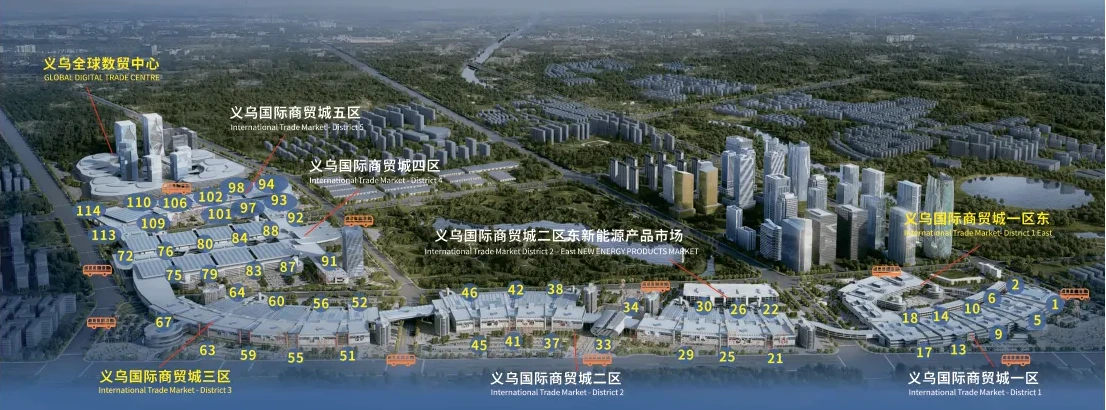
District 5 questions
Where should I start for bedding?
Use 2F as a starting point, then confirm the current supplier booth. Bring finished measurements and a component list rather than relying only on a size label or set name.
Where are fabrics and automotive products?
The Yiwu Fair directory lists textile and knitting materials on 3F and automotive products on 4F. Verify the exact supplier address before visiting.
Are imported goods the same as China-made export goods?
No. Ask where the product was made and which business supplies it. Confirm the exact item, available stock and documents for your intended sales market instead of assuming the display location establishes origin or suitability.
Which floor has pet supplies?
Confirm the supplier’s address directly. Category listings and older diagrams differ, and recent reporting describes additional pet-related spaces on 5F. Use a full booth address rather than one fixed floor assumption.
Is 5F only an e-commerce service area?
Chinagoods describes a service area, while July 2026 local reporting describes renewed spaces with product displays and mixed retail and wholesale activity. Arrange the relevant meeting and confirm the current location.
Can I compare two bedding sets by the number of pieces?
First list each component and its measurements, material and packing. Two sets with the same piece count may contain different items or sizes.
Can I mix colors or buy short fabric rolls?
Ask the supplier to quote your actual mix and lengths. Minimums may apply per color or batch, and the sale unit or roll format can change the offer.
Can the PDF replace current booth information?
The PDF is an offline brochure overview. Use the map for orientation and confirm the current entrance, floor and booth with the supplier.
Sources & editorial notes
- Categories: Chinagoods District 5 introduction ↗
- Floor starting points: Official Yiwu Fair directory ↗
- 5F update: Local report, July 2, 2026 ↗
- Resources: District 5 map · Two-page PDF guide
Sources checked October 3, 2026. Directory facts and recent reported changes are distinguished from Lance buying guidance. Confirm current booth locations, variants, documents and order terms with each supplier. The brochure is an offline reference.

Practical guidance from the Yiwu market.