Yiwu Market District 3 Guide
Stationery, sporting goods, cosmetics and garment accessories — floors, product checks and a practical buying route.
What can you buy in District 3?
Yiwu Market District 3 is a starting point for pens, paper products, eyewear, office and school supplies, sporting goods, cosmetics and garment accessories. Use your buying list to choose a floor, then compare the exact size, material, variant and packaging you intend to order.
District 3 floor directory
Floor categories follow the official Chinagoods District 3 introduction. The checks are Lance buying guidance.
| Floor | Main product areas | What to check |
|---|---|---|
| 1F | Pens and ink supplies, paper products and eyewear | Writing or paper specification; frame and lens version |
| 2F | Office and school supplies, sports equipment and leisure sporting goods | Dimensions, contents, materials and intended use |
| 3F | Cosmetics, zippers, buttons and garment accessories | Exact variant, labeling, size, color and packing unit |
| 4F | Manufacturers’ direct-sales center | Production capabilities, customization and sample approval |
| 5F | Decorative pictures, frame accessories and processing machinery | Artwork or frame dimensions, finish and included components |
What to check in each product area
District 3 rewards careful sample records. A notebook can change with its paper and page count; a zipper with its length and slider; a cosmetic with its shade and fill volume. Photograph the quoted version and attach its supplier reference to your notes before moving to the next booth.
Pens and paper: compare what is inside the product
For pens, record the tip size, ink color, refill type and mechanism. Try several samples on the paper you expect customers to use. Ask whether the displayed item and the quoted batch use the same refill, and whether replacement refills can be supplied.
For notebooks and paper goods, record dimensions, paper weight as specified, sheet or page count, ruling, cover material and binding. Clarify whether “100” means sheets or printed pages. Compare the finish and construction of the cover, and ask which printing and packaging are included. A matching cover photo alone is not enough to compare two offers.
Office and school supplies: define the contents of every set
Open a boxed set and list its components. Record dimensions, materials and any interchangeable parts. Check closures and moving pieces, and ask whether accessories in the display are supplied with the item or sold separately.
For a school range, specify the mix by design and color and whether each item needs an individual retail pack. For branded or printed goods, agree on artwork, print position and approval steps. Keep the plain-stock quote separate from the customized quote so that sample and setup costs stay visible.
Eyewear: identify the frame and lens version
Record frame dimensions, material, hinge type, lens version and the case or pouch supplied. Try the hinge movement and inspect finish around joints. Ask whether the sample is a frame-only offer or a complete item and whether different colors share the same quoted construction.
Write down any product claims you intend to use and request documentation for the exact model. Appearance and a brief booth demonstration do not establish lens performance. Confirm the specifications and documentation your buyer needs before approving an order, especially if the lens or frame changes after sampling.
Sporting goods: match the sample to its intended use
Record dimensions, material, weight where relevant and included accessories. For an inflatable item, clarify the valve and whether a pump is included; for a set, list every piece. Ask how the product is packed and whether it ships assembled, folded or deflated.
Discuss who will use the product and which performance claims matter to your buyer. Request support for those claims and agree how the bulk goods will be checked against the approved sample. A visual inspection helps identify finish and construction differences, but it does not replace verification of a claimed load or durability rating.
Cosmetics: keep the exact variant and batch information traceable
Record product name, shade or variant, stated fill volume, packaging, ingredients information and the supplier’s item reference. Ask to see a sealed sale unit as well as the display tester. Note the batch identification, shelf-life information and storage instructions supplied with the item.
Tell the supplier your destination market and request the documentation and labeling information your buyer needs for that exact product. Confirm who manufactures it and how repeat orders are identified. Keep changes to formula, shade, container or label separate from the original offer. A tester’s appearance or a general supplier document does not establish suitability for your intended sale.
Zippers, buttons and garment accessories: bring a matching reference
For a zipper, define length, type, tape color, teeth material and slider. Confirm whether the quote includes the slider and any puller, and compare the sample against your garment or reference component. For buttons, record diameter, material, finish and attachment details.
Ask whether the sale unit is pieces, pairs, sets, meters or another packing unit. Confirm color minimums and any dyeing or finishing steps. Save an approved color reference and ask how a repeat order will be matched; a phone photograph can help identify the item but is a weak reference for exact shade approval.
Decorative pictures and frame components: separate the artwork from the frame
State whether you need a complete framed picture, an unframed print or components. Record image and outer dimensions, frame profile, material, backing, hanging hardware and protective front where applicable. Ask which elements belong to the displayed price.
For artwork, confirm how the design will be supplied and which permissions your order needs. For fragile or easily scratched pieces, ask to see corner protection and carton packing. A complete framed item and a frame-component quote should occupy different rows in your comparison sheet.
Choose a route around your buying list
Start with the category that needs the most supplier discussion. These are suggested buying sequences, not timed walking routes. Confirm the booth’s building and floor before adding a stop.
| Your priority | Start with | Next step |
|---|---|---|
| Stationery and school supplies | 1F for pens and paper; 2F for office and school supplies | Compare paper, refills and set contents; revisit shortlisted booths with one brief. |
| Sporting goods | 2F: inspect dimensions and construction | Resolve intended use, accessories, packing and sample checks. |
| Cosmetics or garment accessories | 3F: compare exact variants or components | Confirm documentation, colors and minimums; locate connecting-building suppliers separately. |
| Decorative pictures or frame components | 5F: distinguish complete goods from components | Confirm dimensions, artwork, finish and protection. |
Visit 4F when you have a relevant manufacturer to meet or a production requirement to discuss. The direct-sales label is a directory category, not proof that every displayed item is produced by that business. Ask who makes the item and who will fulfill your order.
Save a location photo and contact before leaving each booth. Use a second pass to answer the gaps in your shortlist rather than repeatedly browsing the same aisles. For adjacent buying needs, see the District 1 guide for toys and decorative crafts or the District 2 guide for hardware and appliances. Return to the district overview to plan the wider visit.
Before you compare suppliers
Define the version
Record materials, dimensions, contents and variants.
Fix the price basis
Confirm the sale unit, assortment and included packing.
Keep a reference
Link the sample, quote, booth and next action.
Bring one buying brief to every shortlisted booth
For example: “A5 notebook, 80 sheets, lined paper, the same binding and cover as this reference sample, no logo and an individual sleeve. Please quote 1,000 pieces and state minimums by cover color.” This is an illustrative enquiry, not a market minimum or a recommended specification. Replace it with your actual requirement.
If the supplier offers thinner paper, a different refill or a substitute zipper, keep it as a separate option. Record what changed and ask for the revised price. This makes an apparently cheaper offer easier to assess.
Questions you can use at the booth
- “Which article number and exact variant does this quote cover?”
- “Does the price use pieces, sets, sheets, meters or another unit?”
- “Which components, printing, labels and packaging are included?”
- “What are the minimums per design, size, shade or color?”
- “Can we approve a sample and keep its reference with the order?”
- “Which documents and product details can you provide for this version?”
- “Is this available stock or new production, and when does the lead time start?”
- “Can you send the specification, quote and unresolved points in writing?”
A quote record for District 3 products
Use a row per version or variant. Write “not confirmed” where information is missing and assign a follow-up action.
| Record | Include | Why it matters |
|---|---|---|
| Product reference | Photo, article number, variant and approved sample | Identifies the exact item being quoted. |
| Specification | Dimensions, material, contents, shade and category-specific details | Makes differences between offers visible. |
| Price and minimums | Currency, sale unit, quantity, delivery basis and variant minimums | Avoids comparing different units or assortments. |
| Packing and labels | Retail pack, included printing, carton quantity, size and weight | Supports presentation and shipment planning. |
| Approval and timing | Sample costs, approval steps, stock status and lead-time trigger | Shows what must happen before fulfillment. |
| Traceability | Supplier, building, booth, contact and requested documents | Connects the record to a business and follow-up. |
Use the quote comparison guide to bring offers onto the same basis. Do not choose between two prices until the product, quantity and included items are clear.
After the visit: close the specification gaps
Send each shortlisted supplier a recap with photos, sample references, quantities and questions. Ask for written confirmation of the final version. For print, color or customized components, agree what approval is needed before production and save that approval with the quotation.
Separate confirmed items from items awaiting documentation, samples or revised prices. If several booths will deliver to one receiving point, agree packing identification and who will check the goods. Keep your product reference on the carton record so that similar variants can be distinguished after arrival.
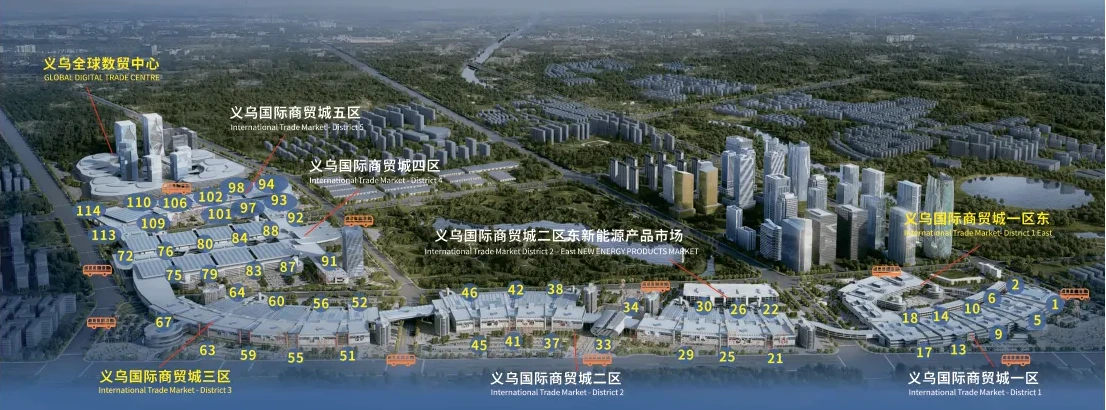
Find District 3 on the map
District 3 questions
Where should I start for stationery?
The directory places pens and paper products on 1F and office and school supplies on 2F. Choose the relevant product area, then confirm the supplier’s current booth.
Which floor has cosmetics and garment accessories?
Start with 3F for cosmetics, zippers, buttons and garment accessories. Some accessory suppliers are in a connecting building, so confirm the full address.
Where are sporting goods and eyewear?
Use 2F for sports equipment and leisure sporting goods, and 1F for eyewear. Confirm the exact model and supplier location before visiting.
Is 5F only for manufacturer showrooms?
The current official introduction lists decorative pictures, frame accessories and processing machinery on 5F. Do not rely solely on an older floor diagram; check the supplier address.
Can I mix different colors or designs?
Ask the supplier to quote your exact assortment. Minimums can apply separately to designs, shades, colors, sizes or customization. Confirm the split rather than giving only a total quantity.
Is a cosmetic display sample enough to approve an order?
First identify the exact product, variant, packaging, batch information and documentation your buyer needs. Request a sale-unit sample and written details; do not treat a tester as the complete order specification.
Can I use a phone photo to match garment accessories?
A photo helps identify the item, but bring a physical reference or measurements for fit and color where possible. Confirm the approved sample and repeat-order reference in writing.
Can the PDF replace the current directory?
The PDF is an offline brochure overview. Its diagrams may differ from current floor categories or booth locations. Use the official directory and supplier confirmation for your visit.
Sources & editorial notes
- Directory: Official Chinagoods District 3 introduction ↗
- Map: Lance District 3 map
- Download: Two-page market guide
Floor categories were checked against the official introduction on October 3, 2026. Product checks and routes are Lance editorial guidance. Confirm booth locations, variants, documents and order terms with each supplier. The brochure is an offline reference and may show an older layout.

Practical guidance from the Yiwu market.